



- Your cart is empty Browse Shop
All you need to know about LPG in Uganda
LPG is quickly becoming the best alternative energy source for cooking, lighting, and heating in homes, industries, and the agricultural sector.
Here are some facts that you should know about this growing energy source.
Let our investment management team
LPG, or Liquid Petroleum Gas, is a versatile and widely utilized energy source that plays a crucial role in various sectors, from residential and commercial to industrial applications. It is primarily composed of two hydrocarbons: propane and butane. These gases are produced during the refinement of crude oil or can be extracted from natural gas processing. The manufacturing process not only makes LPG an easily accessible fuel option but also highlights its importance as a valuable byproduct in the oil industry.
One of the key characteristics of LPG is its storage method. Despite being a gas at room temperature, it can be kept in a liquid state under pressure inside specialized gas cylinders. This feature allows for easier transportation and handling, making LPG a convenient fuel choice for consumers. When needed, the gas is released by opening a nozzle, and ignition can easily be achieved with a flame or spark.
Your time is limited, so don’t waste it living someone else’s life. Don’t be trapped by dogma – which is living with the results
John Mehedii
Commercial uses of LPG
- Industrial fuel. Because of its versatility, LPG is widely used in industries to heat up ovens and kilns that operate on a large scale and also to power up heavy machinery like forklifts. So yes, products such as deodorants, ceramics, baked goods, and textiles are a result of using this gas in production.
- Refrigerant LPG is used as a coolant in refrigeration and air conditioning systems because of its sustainability and environmental friendliness. It is an efficient alternative used in the place of electricity to power up these cooling systems.
- Cooking Gas This is the main use of LPG in homes. It is used in gas ovens and cooking on direct cylinder tops. Gas is preferred in cooking because of its high efficiency. There is high control over the heat as one can easily switch from low to high temperatures instantly.
- Heating. LPG is suitable for water heating. It’s a great fuel for instantaneous hot water systems, and so on.
Frequently asked questions about LPG.
How much does an LPG gas cylinder cost in Uganda?
The price of a gas cylinder depends on your gas supplier. The Ugandan market has various providers who manufacture and sell LPG at affordable prices. Some of the popular Liquid Petroleum Gas suppliers in Uganda are Total, Shell, Kobil, Hass, Oryx, and Hashi.
The tables below show the comparison between the LPG Prices of Total and Shell.
TOTAL
| Cylinder (KG) | Refilling (UGX) | Initial Price (Cylinder and Gas) (UGX) |
|---|---|---|
| 3 | 26,000 | 156,000 |
| 6 | 49,000 | 192,000 |
| 12.5 | 100,000 | 310,000 |
| 38 | 225,000 | 615,000 |
SHELL
| Cylinder (KG) | Refilling (UGX) | Initial Price (Cylinder and Gas) (UGX) |
|---|---|---|
| 6 | 49,000 | 180,000 |
| 6 (with the burner) | 49,000 | 193,000 |
| 12 (metal cylinder) | 96,000 | 280,000 |
| 12 (gas lite) | 96,000 | 324,500 |
| 45 (bulk cylinder) | 267,000 | 562,000 |
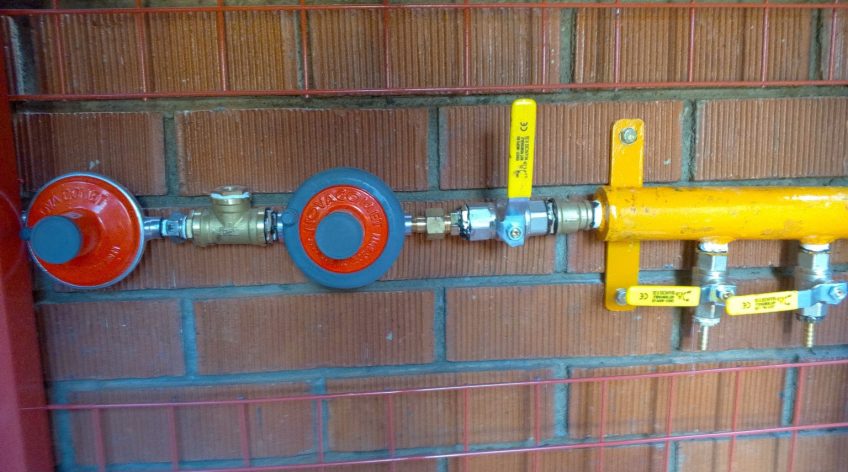
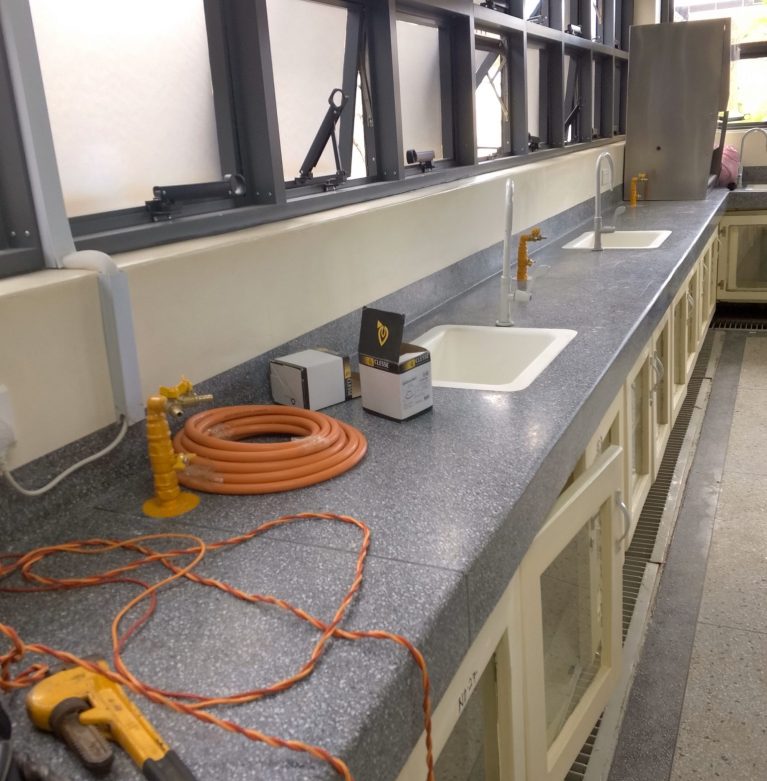
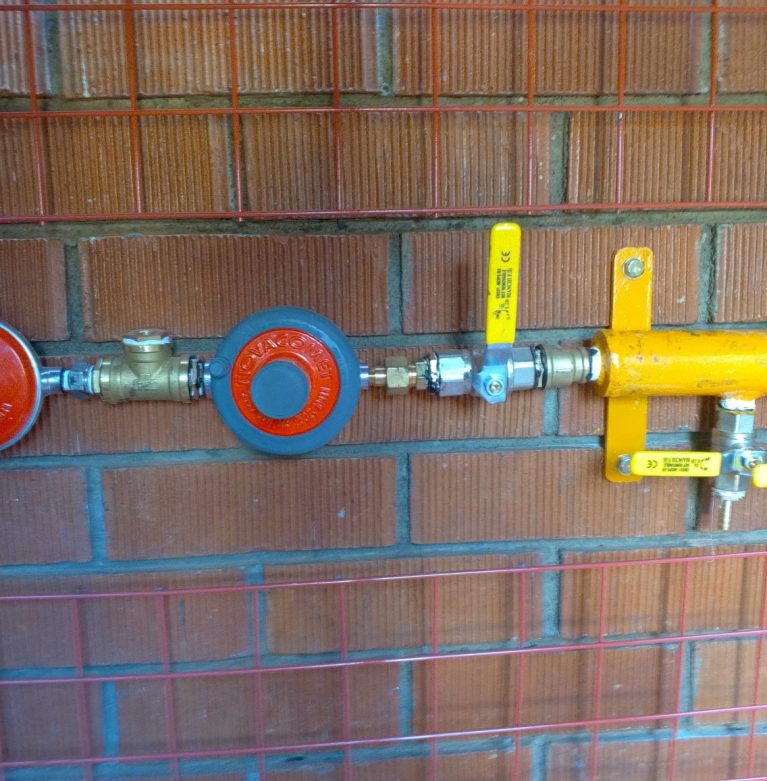
FOR LPG INSTALLATION:
NEET RESOURCES is a leading supplier of LPG in Uganda. We have collaborated with prominent names in the industry.
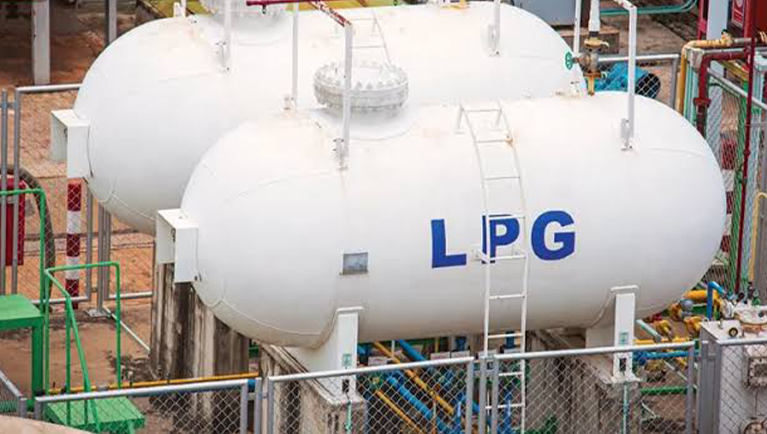
Procedure for LPG Storage Tank Installation
Tanks will be positioned in the tank pit using the appropriate size of the crane and required accessories like a sling provided by the main contractor.
Dimensions and location of the tank pit should be as per the approved drawing.
After the tank has been positioned in the tank plinth, it will be backfilled using fine sand.
Procedure for piping hook-up to equipment
The completed piping will be hooked up to the plant & equipment as soon as they are erected, or if equipment arrival coincides with the construction schedule, the piping will follow the completion of equipment installation.
Sufficient field joints in the pipe will be kept for adjustment, alignment, and modification if required.
All the nozzle location orientations will be checked for the installed pipes after the equipment is in position. If any modification is required to match the Equipment nozzle connection to the piping will be done.
All pipe connections will be checked to ensure that it is connected without tension.
Once all installation activity will completely remove all equipment connections and the complete piping system will be flushed and pressure tested using nitrogen.
Pipelines shall be connected to equipment after completion of installation and testing.
After completion of all activities, a final inspection will be conducted and recorded
Hangers and Supports Installation
A. Ground-Level Pipe Supporting:
The distances between each pipe support will be as per the approved drawing.
The support will be of the “C” channel.
One side of the channel will be bolted to the concrete slab/floor (existing slab/floor).
The other side will be used for pipe placement with a proper “U” clamp.
The “C” channel supports will be painted to avoid corrosion.
B. High-Level Pipe Supporting:
The distances between each pipe support will be as per the approved drawing.
Threaded Rod with a rubber-lined clamp support will be used to hold the pipe.
One side of the threaded rod will be fixed to the ceiling with the help of a drop-in anchor.