



- Your cart is empty Browse Shop
Our Services
Trusted Water Purification Experts Since 2017
We design, install, and maintain advanced water purification and treatment systems for homes, industries, and municipalities worldwide.
Gas Production & Distribution
LPG is quickly becoming the best alternative energy source for cooking, lighting, and heating in homes, industries, and the agricultural sector. LPG is a transportable fuel that is important to both. LPG (liquefied petroleum gas) is rapidly emerging as the preferred alternative energy source for cooking, lighting, and heating in homes, industries, and the agricultural sector. It is a portable fuel that plays a crucial role in both Uganda’s domestic and export energy markets. Processing LPG requires sophisticated gas mixtures to accurately calibrate analyzers. Uganda’s domestic and export energy markets. Processing requires sophisticated gas mixtures to calibrate analysers.
Removal of the lightest hydrocarbon - ethane
To be used on the site as a fuel in combustion processes which generate heat and steam that are required on the gas processing facility. Ethane removal allows the production of LPG as a liquid fuel which enables convenient transportation.
Purification of the LPG using molecular sieves
Sulphur is removed to ensure the fuel burns cleanly, avoiding SO2 production. Water is eliminated to prevent reactions with residual sulphur chemicals that could cause acidic corrosion of pipelines, LPG tankers, or storage tanks.
LPG (liquefied petroleum gas) consists of a mixture of propane and butane. These are light hydrocarbons that are produced either from ‘wet’ natural gas sources that contain a combination of butane, propane, methane, and ethane molecules, or during the refining of crude oil, where they are among the lightest fractions that can be recovered.
To liquefy liquefied petroleum gas (LPG), it must be cooled to about -42°C at atmospheric pressure or stored as a liquid under a pressure higher than its vapor pressure. This vapor pressure is approximately 1000 kPa (10 bar) at around 30°C. As a result, LPG is easier to liquefy and store than liquefied natural gas (LNG), contributing to its widespread use as a highly transportable fuel.
LPG gas cylinders are commonly used in various applications, including fueling forklift trucks, providing gas for barbecues, fueling patio heaters, and for cooking and heating in rural areas where there is no access to piped gas networks. In these regions, the electricity distribution grid may struggle to support the high energy demands of heating applications. Additionally, LPG can be used as an automotive fuel, although the distribution and storage supply chain for this purpose differs slightly.

LPG storage and distribution
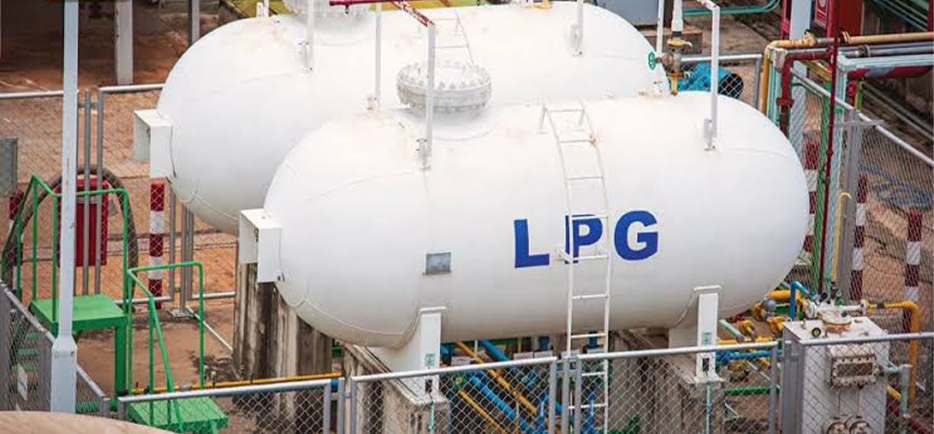
Liquefied petroleum gas (LPG) is usually stored in large quantities within pressurized containers, often referred to as “bullets.” An example of the LPG distribution and supply chain involves delivering the gas in road tankers to storage tanks located at roadside service stations. From there, it can be transferred from these large tanks into smaller tanks for use in cars and trucks.
LPG fractionation involves the following principles:
- Removal of the lightest hydrocarbon
- Separation of the LPG fraction
- Purification of the LPG using molecular sieves
- Fractionation of the heavier hydrocarbons into naptha and heavy crude oil
LPG is typically stored in low-pressure welded cylinders, which are different from the high-pressure seamless cylinders used for gases like oxygen, nitrogen, or argon. The welded cylinders are wider and have thinner walls compared to their high-pressure counterparts, and they feature a noticeable welded seam around the middle.
During the production of these welded cylinders, stringent quality control measures are implemented to ensure that there is no porosity in the weld, as this could lead to LPG leaks and pose safety hazards. To detect any potential leaks, gas mixtures containing helium or hydrogen can be used. This design and construction method for LPG cylinders is chosen because it is significantly more cost-effective than producing high-pressure steel cylinders.